
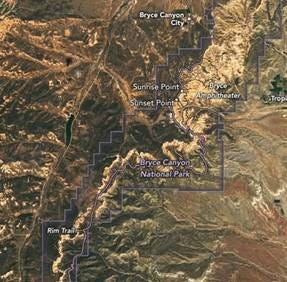
Hi friends, this is Marilyn writing. I know you’re expecting Lucas to come up with something super insightful, as he does, but instead you’re getting me. Don’t worry, he will be back soon, meanwhile, I promise to put a lot of extra effort into this piece because it’s so important right now! I will start by saying, that as you probably know, a lot has happened in the world the last few weeks, but also in our family. We took a little break to go on an family vacation and, with 4 children, you can imagine how our hands were quite full. Right after that, Lukie turned 1 year old! Time absolutely flies—that little one took his first few steps that same week. And lastly, Lucas got knee surgery done right after that. He has been in recovery, and it has been heavier on his body than he expected. He had not had surgery since he was a kid and thought he’d be back on his feet right after. Moms that have had C-sections like I did with both my kids, will understand when I say this: bless his heart. But I am very respectful of his situation, as he injured his knee while he was on active duty as a Marine. Another reason to love the VA. But like I said before, he will be back soon, hopefully in the next week or so. Now that we’ve caught up, we can dive into the world outside and today’s Substack issue. Data center fights are everywhere right now. If you haven’t seen in the news, Utah is fighting against a massive data center that was recently approved, despite the many residents’ protest against it. And not for little reason, this Data Center’s footprint is roughly 2.5 times larger than the island of Manhattan. Bigger than Bryce Canyon National Park. Bigger and hungrier than most of us can even imagine.
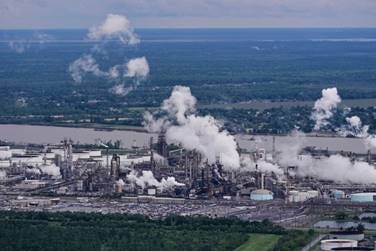
There’s been a similar fight here in Independence, Missouri, where we live (right outside of Kansas City, Missouri for our non-Missourian readers) with leaders similarly approving a new data center echoing all sorts of company promises. Like the byline on the actual tech company’s website: “Nebius is a private, European-based technology company. The development is expected to bring tens of millions of tax dollars to the City of Independence.” According to most report, Nebius is going to pay about $30 million dollars to the City of Independence each year. It would have been around $300 million per year if the city hadn’t given the data center a 90% tax break during their negotiations. But, then again, to be fair, the land currently generates just a few thousand dollars a year just sitting there, so even after the abatements it’s a lot more money than was originally coming. Which makes it sound like a win, right? Unfortunately, one of the big problems with these negotiations is that they often focus on tax dollars and don’t think about all the other costs and consequences. So, what should towns across the country, like Independence, be negotiating before saying yes to AI? This is important for everyone to know so that we can hold our leaders accountable and don’t just say yes to data centers while entering into deals we may not fully understand. Because the reality is that despite all their promises, once a data center is built it doesn’t employ the towns, it plugs into it. What’s actually being built? To put it simple, a modern AI data center isn’t just another commercial building. It’s heavy industry. More like the kind of infrastructure you’d find in places like Louisiana’s petrochemical corridor (“Cancer Alley”): facilities that run constantly, draw enormous resources, and reshape the systems around them. Except instead of refining oil, these facilities refine data. And they do it at a scale that’s easy to underestimate.
The Nebius plant in Independence, for example, is projected to use the same amount of electricity as 400,000 Independence homes would. Note: there are only 50,000 households in all of Independence… That’s a pretty big change. The largest new AI projects go even further. Some proposed clusters, like OpenAI’s, are expected to consume as much power as New York City and San Diego combined during peak demand. To quote some writers and experts, “it is scary”. Basically, these data centers add a large city’s worth of energy demand to much smaller towns. And this is not a slow shift. It’s an explosion that sends electricity prices through the roof for everyday people. Bloomberg analyzed electricity price increases in regions located near significant data centers and found that electricity per month costs as much as 267% more than it did just five years ago. Let’s do some back of the napkin math for Independence to see just how quickly the promised $30 million a year in tax revenue evaporates and then goes very, very negative for the people of Independence. With 50,000 Independence households spending about $150 per month in electricity bills, we’re talking about $90 million per year in total household electric bills. If the Independence electricity rate goes up just 33% because of that massive data center, which it certainly will, then the $30 million per year in revenue is already zeroed out. Anything after that, and the people of Independence simply have less money than they did before the center came. When the price of electricity doubles, which is highly likely based on the Bloomberg data, the people of Independence will be paying $90 million more in electricity than they were before the data center arrived, and only getting $30 million in exchange. The math ain’t mathin, it is absolutely brutal. Anywhere you live in the Midwest, an equally bad deal is coming for you, too. Big AI is targeting places like Missouri, Kansas, Iowa, and Indiana. Not by accident, but because the Midwest has cheap land, a willingness to generate power, cash-strapped local governments, and water. So what about water? Data centers run on water as much as they run on electricity. Servers generate heat. To prevent overheating, many facilities rely on evaporative cooling systems, which consume outstandingly large volumes of water every day. We’re talking about a demand that eventually require hundreds of millions to over a billion gallons of water per day nationally, placing significant strain on local systems, especially the smaller municipalities that these data centers target. Water systems in the US are highly fragmented, with more than 50,000 separate systems around the country. Most Midwestern communities rely on these small independent water systems that were never designed for large industrial-scale continuous demand. And something we rarely hear about when talking about water consumption in Data Centers, is that after the water has been used in them, a large portion of the water used doesn’t come back in a form communities can easily reuse. Part of it evaporates into the air as part of the cooling process, meaning it doesn’t return into the local water system, it is effectively removed from the watershed. The remaining water, known as “blowdown” is discharged as wastewater. This wastewater contains concentrated minerals and treatment chemicals that often require additional processing before it can safely re-enter municipal systems. That means that when a data center comes in, the question isn’t just “do we have water?” It’s: can our system handle sustained high-volume withdrawals all year round? What about on hot summer days when data centers use 30 times as much as their daily average? Or in a drought year? And, most importantly, what infrastructure do we need to add to make it that way and who is going to pay for it? No one knows how much extra the people of Independence are going to pay on their water bills, in addition to their higher electric bill, because nobody properly looked into it. The only thing for certain, is that we are essentially paying the data center to come here and suck wealth out of our community for almost nothing in return. Because unlike factories or other large employers, despite demanding major infrastructure support, Data Centers create relatively few permanent jobs. Will these Data Centers bring many jobs to the town that hosts them? This is usually the first thing people hear: jobs. It is the reason many communities say yes. And at first, they do, actually. Building a data center takes hundreds, sometimes thousands of workers. There are contractors, electricians, engineers, and suppliers. Local hotels fill up. Restaurants get busy. It feels like growth. But it’s short-lived. Once the facility is built, the number of permanent jobs drops sharply. A large data center can operate with dozens of employees, not hundreds. Many roles are highly specialized. Many systems are automated. Ironically, the companies and communities pouring billions into AI are actually reducing their workforces and their efforts are likely reduce overall jobs in the long run. So I guess I was wrong when I said we are just paying them to come in and suck wealth out of our community. We are also essentially paying them to come in and destroy jobs! What’s Already Changing and What Still Needs to Be Asked Fortunately, some people are beginning to realize these are not ordinary developments and that they shouldn’t be treated that way. Just last month, for example, Independence voters ousted everyone on the municipal ballot who had forced through the data center approval! Kansas City recently passed one of its first major zoning changes specifically targeting data centers, limiting where they can be built and requiring more public review. And in Peculiar and St. Charles, Missouri, residents actually stopped the data centers from coming in at all But, so far, it’s hard to see any concrete examples of communities setting the right terms for these companies before they arrive. It’s been a bit of an all or nothing approach. And community leaders are still often only asking “home much revenue will this bring in” without also asking “how much is this going to cost our citizens.” I wanted to share all of this information with you today because I believe that can change if we all know what’s actually happening and what we are up against and can educate our leaders. So that instead of accepting the terms from these companies, we start setting them. So, as always, please share this with anyone who is thinking about or could be impacted by a data center, thank you for reading, and keep on fighting! Marilyn Kunce *On a different note, truly there are a lot of news coming at us at once these days, it is hard to pick a topic when so much is going on around the world. We are hoping to write more about some of these pieces of policy that are being rolled back and bring very bad consequences for everyone. Lucas and I have each very different areas that we personally focus our work on, which makes it great for bringing you loads of great insights. Some ideas I have, personally, are regarding the environmental rollbacks, let me know in the comments if you’d like me to write a piece for each? Or if you’d prefer if I grouped them on themes? Or if you want a list with the big picture points and what to look for? I want to be able to dive hard on the policies, the consequences, what it means for the Midwest and our family’s health and future. Should I do a podcast on these? Truly, I have so much to tell you all, that I am really thinking about putting a podcast out every other week with the major rollbacks in simple words. Let me know what you guys want, and I will do my best! I also have the honor to work with some people who are absolute experts on certain topics, and I am more than happy to talk to them, and break it down to simple words. You're currently a free subscriber to Lucas’s Substack. For the full experience, upgrade your subscription.
|






No comments:
Post a Comment