Today, Marilyn gives you an inside look into what it was like for her growing up in Mexican Narco Territory after her once peaceful area was taken by Narco expansion. Many Mexicans believe that the US could play a role in countering narco-terrorism. After all, narco-terrorist organizations wouldn’t exist without massive US drug demand and an equally large flow of money and weapons back into Mexico—often supported by corporate and financial structures located in the US. But as much as many can imagine a path for cooperation, there is a lot of uncertainty, fear, and distrust in the US’s ability to do it right. Now, Marilyn recounts the sadness and fear she encountered living among terrorists, and potential paths forward. -Lucas This past Sunday, news outlets once again turned their eyes to Mexico. Nemesio “El Mencho” Oseguera Cervantes, the elusive leader of the Jalisco New Generation Cartel (CJNG), was killed in a military operation carried out by Mexican security forces with U.S. intelligence support. He led a criminal enterprise with tentacles throughout Mexican territory and into all 50 US States and over 40 countries. Headlines like this about Mexico today might not be shocking, but to me, that wasn’t always the case. I have talked before about growing up in Mexico. In those days, Mexico felt wide, safe, and unguarded. My earliest memories are of long highway rides, where the biggest threat was a coyote darting into the road or the rare encounter with a drunk driver. My parents talking in the front seat, the stereo playing my mom’s favorite songs, the landscape rolling out peacefully before us. We roamed freely in the back of our purple 1991 Ford E-150 van.
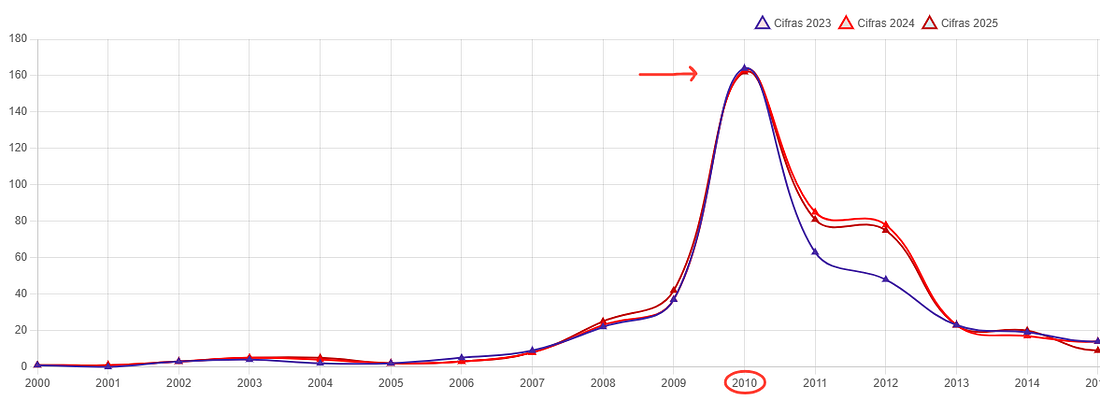
In our corner of Mexico, like most of the country, there was no such thing as a “narco culture.” No sense that violence could interrupt on an ordinary Tuesday. Then, in 2010, in my senior year of high school, the ground shifted. That year we were supposed to take a school trip to some touristic part of the country. It was a rite of passage at our school, permission to see more of our own country that was vast, beautiful, and ours to discover without fear. My sister had gone to Puerto Vallarta on hers. My brother walked among pyramids and ancient ruins on his. Now it was finally my turn! I wondered whether I would finally make it to a beach washed in gold light, I imagined stepping onto warm sand for the first time. My friends and I speculated endlessly at every break we had between classes. But it never happened. What had once been routine became unthinkable almost overnight. That year, everything changed for us back in my hometown, and stories of carefree school trips became a distant memory. We learned what it meant to shelter in place, not for a storm, but for men with rifles. We spent days inside while what sounded like a war zone unfolded outside our windows. Streets emptied into ghost towns. Schools closed. Businesses shuttered. Government offices locked their doors. 2010 brought a darkness we had never known in my hometown, nor in so many corners of Mexico. Town officials were killed in front of their families. Police officers were assassinated or resigned because resisting was futile. The cartels did not merely outnumber them; they outgunned them, wielding weapons and bulletproof glass that most of us had only seen in films and that certainly weren’t made in Mexico. And then there were the disappearances, boys I grew up with vanished. More than half of the missing and unlocated persons cases were in the age range between 15 and 34 years. We heard whispers that many were coerced into working for the cartels to protect their families, a pattern unfolding across the country. In Durango alone, my hometown, the trend of disappearances that spiked in 2010 is clear.
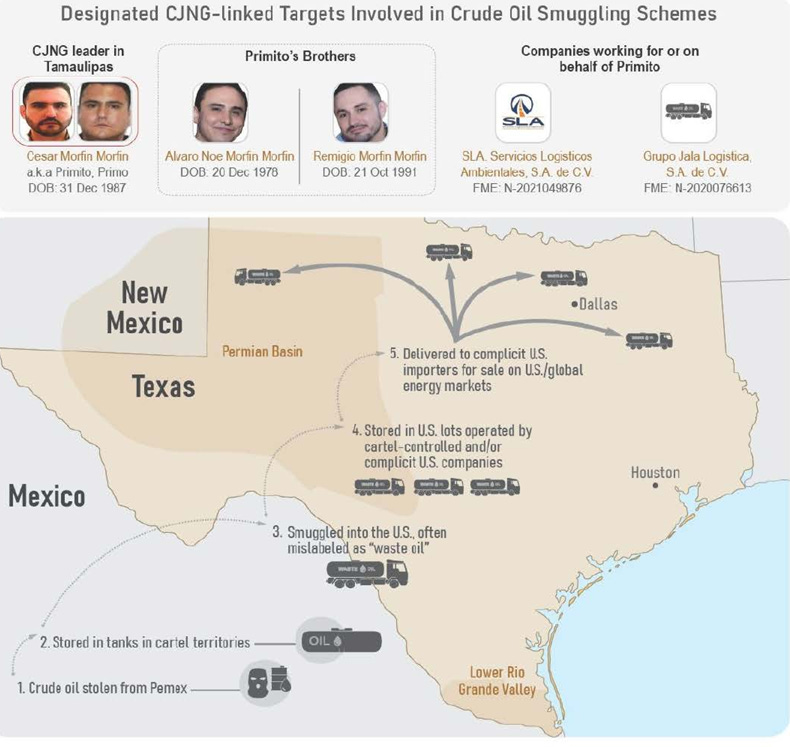
We did our best to adapt. We learned new routes home. We stopped lingering in the plaza after dark. We lowered our voices when certain names were mentioned. Survival began to masquerade as normalcy. I will tell you now my own encounter with narcos, and how by fortune alone, I am here to recount it: In 2011, I moved to Durango City to attend college. I was an 18-year-old freshman and the city felt both thrilling and unfamiliar. I had visited a number of times with my family before, but this was my first time moving around solo. I had to learn how to navigate buses. A large number of students move around town using the bus system. The routes are long, stretching across neighborhoods and outskirts, and by the time the buses reach the halfway point, there is often no room left for anyone else. The drivers simply pass the remaining stops without slowing down. My classes began early, the first one of them at 7am. I would plan to catch an earlier bus and if it was too full to stop, I could still take the next one and arrive just on time. One day, just like any other day, I was at the bus stop waiting for the 6:15am bus, as I had done multiple times now. This was during light saving season, so the morning was still deeply dark. I saw headlights in the distance from what seemed to be a large vehicle approaching. It could have been a bus, though in that darkness it was hard to tell. I did not think much of it until it passed me. As it did, a chill ran through my whole body. I knew exactly who drove vehicles like that in the city. Big trucks were common in rural areas, built for crops and battered roads. But in the city, no one drove those oversized machines without meaning to be seen. They drive them through town as a statement of dominance. The only people who drove through Durango City in trucks like that were the cartels. Another chill ran through me when I saw the vehicle brake, then reverse slowly until it stopped right in front of the only light pole near us. I was the only person there besides them. I turned as the driver stepped out. A large man, perhaps in his thirties, walked toward me. I could see the gun tucked into his waistband. I tried not to let my eyes linger on it. Even now I can recall his outline more clearly than his face. The darkness softened his features into fragments. Dark eyes. Dark hair. A broad nose. A poorly trimmed beard. Heavyset. His voice was raspy, words slurred, though not enough to dull his intent. He smiled. “What is a young, beautiful lady like yourself doing here all alone? It is dark, you know that, right? It is not safe out here.” I forced a smile in return and steadied my voice. “Yes, I know. I am on my way to college. The bus is just taking a while. But it should be here any minute now.” I wanted him to imagine witnesses arriving, a bus full of students pulling up behind him. I wanted him to feel exposed. He laughed. I exhaled slowly. His eyes moved over me, unhurried, enjoying the power of being the one who was not afraid. He said next, almost casually, “I can give you a ride. My truck is right there. My friend is in it. I am sure he will not mind. In fact, I know he will enjoy your company.” By then my nerves were visible. Running felt useless on that wide, empty road. There was nowhere to hide, nowhere to outrun a bullet. So instead, I turned my back to him. “No, thanks. I will wait for the bus. It should be here very soon.” I said it as if dismissing a persistent stranger. I hoped he would lose interest. He did not. And turning your back on a man with a gun is foolish. He drew it and pressed it to my head, grabbing me from behind. I could smell alcohol on his breath as he whispered into my ear, “You are coming with us.” He stated. There was no space for resistance. I walked to the truck and slid into the passenger seat, nodding at whatever they said. The two of them talked about the night before, laughing at memories I could not follow. I barely remember the details. I remember the weapons. One pressed against my side from the back seat. Others lying on the floor. At some point they mentioned the highway toward Sinaloa. They spoke of a girl already there, waiting. They said she and I would be fun. My heart pounded so hard. I understood then that release would not come by asking. I studied the roads without turning my head, trying to fix landmarks in my mind. They avoided main avenues, slipping through smaller streets. I wondered whether the man behind me was drunk enough to miss if I ran. His words were still slurred. I decided that if even the smallest chance appeared, I would take it. Then, a miracle happened. A car cut in front of us, forcing the truck to stop abruptly. In that same breath, I realized the door beside me was unlocked. I opened it and ran. I did not hesitate. I turned the first corner I saw, then another, slipping through an alley. To my shock, I was not far from campus. I ran straight to the college building. I did not look back. Inside, I saw a familiar face and collapsed into sobs. I had made it. That morning, a miracle stood between me and becoming another statistic. El Mencho The man we have all been hearing about in the news, Nemesio “El Mencho” Oseguera Cervantes was born in rural Michoacán, where boys have long grown up watching legal agriculture and illicit cultivation co-exist. The line between survival and crime blurred early for them and power was measured in weapons and loyalty. He was typical of a generation shaped by expanding criminal networks, whose started learning the trade young and whose most direct path to upward mobility was through the cartels—which meant a unique relationship with the United States. El Mencho immigrated illegally to the US in the 1980s and got his next level of narco-training in the San Francisco Bay Area, . While there he was arrested for weapons and narcotics offenses, served several years in prison, and was deported back to Mexico. While in the US, he became embedded with members of the Valencia crime family, eventually strengthening those ties through marriage. After his return to Mexico, he rose through organized crime ranks and eventually co-founded what became the Jalisco New Generation Cartel (CJNG). He shaped the group into a force structured like an army and managed like a business. CJNG became a vertically integrated criminal enterprise: producing and distributing fentanyl, methamphetamine, cocaine, and heroin; operating clandestine laboratories; acquiring high-powered weapons; stealing and smuggling fuel; extorting businesses and agricultural producers; running timeshare and real estate fraud schemes; engaging in human smuggling and trafficking; expanding into illegal mining; and laundering vast sums through shell companies and cross-border financial networks. The group earned a reputation as one of the most violent criminal organizations, linked to tens of thousands of deaths over the past decade. Rosalinda González Valencia, more than simply the spouse of “El Mencho,” was widely identified by U.S. and Mexican authorities as a key financial operator within the network tied to the CJNG, and its associated money-laundering structure known as “Los Cuinis”. Rosalinda was alleged to have helped manage a web of businesses across the hospitality, retail, agriculture, and real estate sectors. These companies were accused by the U.S. Treasury of serving as vehicles to move, disguise, and legitimize cartel proceeds. González Valencia was first arrested in 2018 on charges related to illicit financial operations and organized crime, later released on procedural grounds, and then re-arrested. After years of pretrial detention and legal challenges, she was released in 2024, citing insufficient evidence to sustain organized crime charges, although financial investigations had surrounded her case. Her case highlights a central tension in dismantling narco enterprises: arresting armed leaders is one battle; proving intricate financial conspiracies inside layered corporate structures is another, often far more complicated one. The Relationship Between the Cartels and the US It is impossible to understand the rise of CJNG without acknowledging the role the United States has played, even if indirectly, in creating the conditions that strengthened it. First, there is demand: The constant U.S. demand for narcotics, intensified by the opioid crisis and the rapid expansion of fentanyl has proven enormously profitable. Second, there is energy supply convenience: In Texas, cartel-linked networks have been documented operating near border regions and energy hubs, where stolen crude and fuel are smuggled across the southwest border into the United States and integrated into the legal energy market before eventually being resold and refined.
This has raised serious questions about why the illegal economy continues to mix with the legal one in Texas, especially given political rhetoric about border protection and energy security when these systems remain vulnerable to exploitation by transnational criminal organizations. Third, profitable firepower: The flow of American weapons is directly linked to increased violence and homicide rates in Mexico, and there is a thriving cross border gun market. Data from the Bureau of Alcohol, Tobacco, Firearms and Explosives (ATF) indicates that between 70% and 80% of firearms seized in Mexico and submitted for tracing originated north of the border. Estimates suggest that over 135,000 firearms are trafficked across the U.S.-Mexico border each year. Fourth, revenue streams: Sophisticated organizations launder funds through legitimate sectors, embedding themselves into legal markets, often in the US, until illicit capital appears ordinary. If the goal is to meaningfully weaken organizations like CJNG, the strategy cannot rely solely on arrests and military operations, and it certainly can’t remain as haphazard as it has been. When Mexicans think about the US helping solve the problem they have helped create, trust is probably the biggest sticking point. The messages and actions have been so mixed its hard to believe that the US is serious about taking on the problem. Whether through pardons for individuals convicted of drug related crimes, including the late 2025 pardon of former Honduran president Juan Orlando Hernández after his U.S. drug trafficking conviction, or the entering of 17 family members connected to Joaquín “El Chapo” Guzmán, to the United States through negotiated legal arrangements, the federal government sends conflicting messages about the most basic thing: accountability, which makes it hard to believe that it will be trustworthy about anything. Protecting Americans, and by extension Mexicans, requires consistency: strong enforcement, transparent standards for clemency and immigration decisions, and financial oversight of corporate infiltration. Beyond the Man El Mencho’s death marked a symbolic milestone. But without addressing the economic and corporate infrastructure that enriched and protected CJNG, its unlikely to be meaningful long term. The CJNG case illuminates a broader trend: Narco influence is no longer peripheral to the global economy; it is embedded within it. Policymakers in the United States and around the world, must acknowledge that this cartel already operated, both legally and illegally, across all 50 U.S. states and over 40 countries, and has done so for more than a decade. That complexity is the sobering truth. The environment that shaped him, the normalization of Narco power as parallel governance, cannot be undone with one operation. Although the narcos eventually pulled back from my hometown, they did not return to where they began. Instead, they expanded their reach. Their territorial footprint across Mexico is larger now than it was during my childhood, increasing the likelihood that more boys are being socialized within the same violent ecosystems that produced El Mencho. In order to get real change, we need to rebuild institutions strong enough that we ensure the next boy growing up in a rural town sees a different ladder to climb. The U.S. could, and maybe even should, contribute to that effort give the outsized role it has played in fueling the problem, but only in ways that respect Mexican leadership and sovereignty. I think the biggest barrier to that right now is is that US inconsistency, and perceived double standards, leave Mexicans questioning whether deeper U.S. engagement would be politically viable or even successful within Mexico. It’s a question much of the world seems to be grappling with when thinking about talking to the US right now, and that’s a hard truth to accept. In towns like mine, little girls once imagined America as a place that stood for something steady and hopeful. Now it appears less like an exception and more like another potentially bad actor in a complicated, sometimes frightening world. Marilyn Kunce You're currently a free subscriber to Lucas’s Substack. For the full experience, upgrade your subscription.
|
Saturday, February 28, 2026
When Narcos Took Over My Town







Subscribe to:
Post Comments (Atom)
No comments:
Post a Comment